Showing 1–16 of 18 results
-
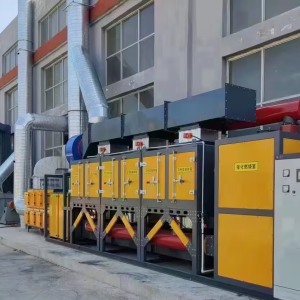
Activated carbon adsorption and desorption equipment is a kind of equipment widely used in environmental protection, chemical industry, medicine, food and other fields. It mainly uses the adsorption characteristics of activated carbon to separate and purify various gases and liquids. This article will comprehensively analyze the principle and application of activated carbon adsorption and desorption…
-
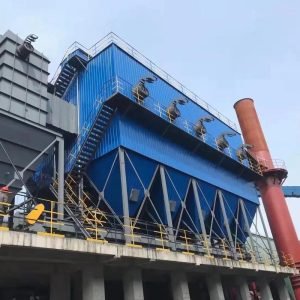
Bag filter is a dry dust filter. After the filter material is used for a period of time, due to the effects of screening, collision, retention, diffusion, static electricity, etc., a layer of dust accumulates on the surface of the filter bag. This layer of dust is called the primary layer. In the subsequent movement…
-
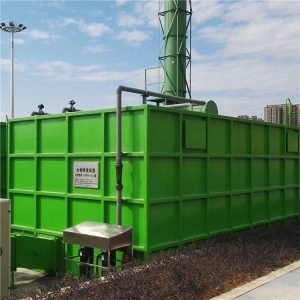
The biofilter deodorization equipment is an environmental protection device based on microbial metabolism, and its core consists of a pretreatment unit and a biofilter bed. The pretreatment unit removes large particle pollutants and adjusts the temperature and humidity of the gas through spraying, dust removal, humidification and other steps; the biofilter bed is filled with…
-
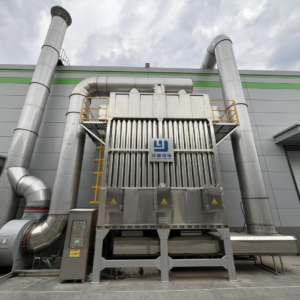
Adopting integrated processes including A/O, MBR and MBBR, this equipment steadily removes COD, BOD₅, ammonia nitrogen, total phosphorus and suspended solids. The effluent complies with Grade A/B standards specified in GB 18918. Core Performance COD removal rate ≥ 85%, ammonia nitrogen removal rate ≥ 90%, SS removal rate ≥ 95%. It supports fully automatic continuous…
-
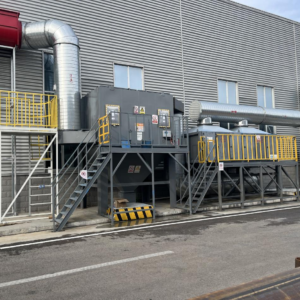
Main types: Pulse bag dust collector, cartridge dust collector and wet dust collector. Dust removal efficiency ≥ 99.9%, with outlet dust concentration controlled at 10–30 mg/m³. Effectively captures wood dust, metal dust, cement dust, mineral dust and welding fume. Key Parameters Air handling capacity: 1500–300000 m³/h; Filtration wind speed: 0.8–1.2 m/min; Cleaning mode: High-pressure pulse…
-
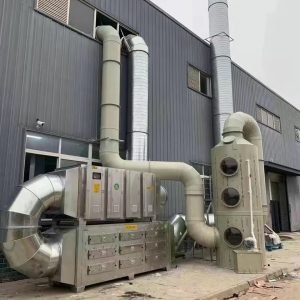
High-efficiency spray scrubber is a device that removes pollutants from waste gas through gas-liquid contact and is widely used in industrial waste gas treatment. Its main functions include removing dust particles, acidic gases (such as SO₂, HCl), organic waste gas (VOCs) and some toxic and harmful substances in the gas. The core principle of the…
-
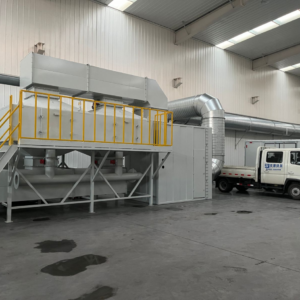
Main processes: Zeolite rotor concentration + RTO/RCO, regenerative thermal oxidation and condensation recovery. VOC removal rate reaches 95–99%. Capable of treating high-concentration organic waste gas above 5000 mg/m³, with high thermal efficiency, stable operation and no secondary pollution. Key Parameters Air handling capacity: 5000–100000 m³/h; RTO furnace temperature: 760–850 ℃; Gas residence time ≥ 1…
-
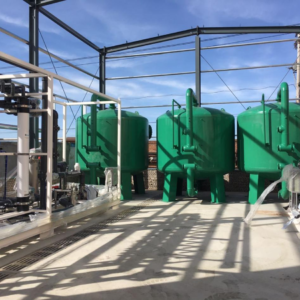
Customized integrated systems for complex wastewater from chemical, electroplating, printing and dyeing, pharmaceutical, food processing and mechanical manufacturing industries. It enables qualified discharge or water reuse for pollutants including COD, ammonia nitrogen, total phosphorus, heavy metals, salinity and chromaticity. Core Performance COD removal rate ≥ 90%, heavy metal removal rate ≥ 99%, salt rejection rate…
-
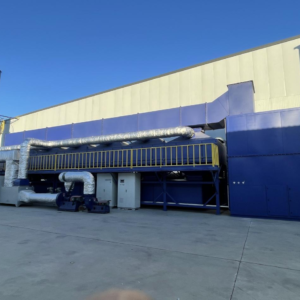
Combined process: Mechanical pre-treatment + High-voltage electrostatic plasma + Activated carbon deodorization. Fume purification efficiency reaches 90–95%, with outlet concentration ≤ 1.0 mg/m³, meeting the catering fume standard GB 18483. It realizes simultaneous oil removal and deodorization. Key Parameters Air handling capacity: 2000–60000 m³/h; Electric field voltage: 12–18 kV; System resistance ≤ 300 Pa. Modular…
-
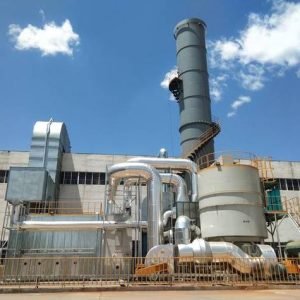
Thermal combustion equipment (RTO for short) oxidizes organic matter (VOCs) in waste gas into corresponding carbon dioxide and water at high temperature, thereby purifying waste gas and recovering the heat released when the waste gas is decomposed. RTO has a waste gas decomposition efficiency of more than 99%, a heat recovery efficiency of more than…
-
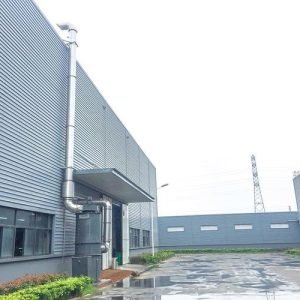
Wet dust collector is commonly known as “demister”. It is a device that makes dust-containing gas and liquid (usually water) in close contact, uses the inertial collision of water droplets and particles or the full mixing of water and dust and other effects to capture particles or make particles larger or remain in a fixed…
-
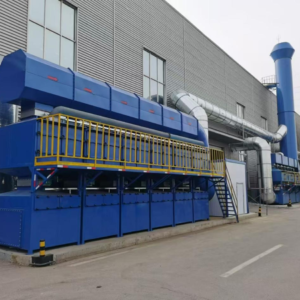
Specially designed for wastewater with high COD, high ammonia nitrogen, high grease and high SS. It adopts a combined process of Bar Screen + Oil Separation & Dissolved Air Flotation + Hydrolytic Acidification + A²/O + Advanced Sedimentation & Disinfection. Core Performance Oil removal rate of pretreatment unit ≥ 90%; COD removal rate of biochemical…
-
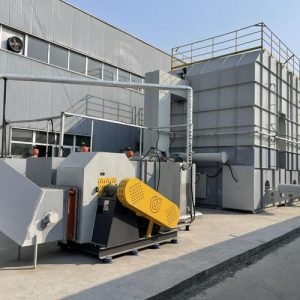
Three-bed RTO equipment (three-bed regenerative thermal oxidation furnace) is an efficient treatment equipment for organic waste gas, which is widely used in various industrial fields. Application fields Three-bed RTO equipment is widely used in building materials, decoration, home appliances, packaging, printing, petroleum, chemical, pharmaceutical, agricultural and sideline products (such as grain, fruits, feed), rubber…
-
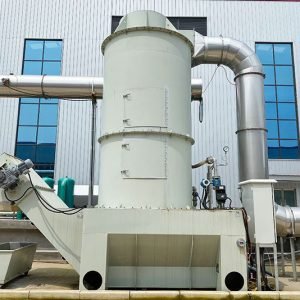
The Venturi wet dust collector is a highly efficient dust removal equipment, which is mainly used to treat dust-laden gas, and achieves dust removal effect through close contact between water mist and dust-laden gas. Its core component is the Venturi tube, which consists of a contraction tube, a throat tube and an expansion tube. After…
-
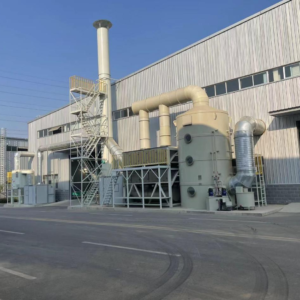
Main processes: Spray absorption, activated carbon adsorption, photocatalysis, plasma purification and RCO (Regenerative Catalytic Oxidation). Treats acid-base waste gas, odor and low-to-medium concentration VOCs with an overall purification efficiency of 90–95%, complying with GB 16297 and other emission standards. Key Parameters Air handling capacity: 1000–100000 m³/h; System resistance ≤ 1000 Pa; Adsorption wind speed: 0.2–0.6…
-
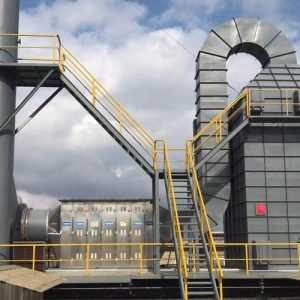
Wet electrostatic precipitator is a device that uses the principle of electrostatics to remove fine particles in the gas. Its working principle is to apply high voltage between the anode plate and the cathode line to cause the corona layer to produce ionization, and the dust particles in the air are combined with the ions…

