

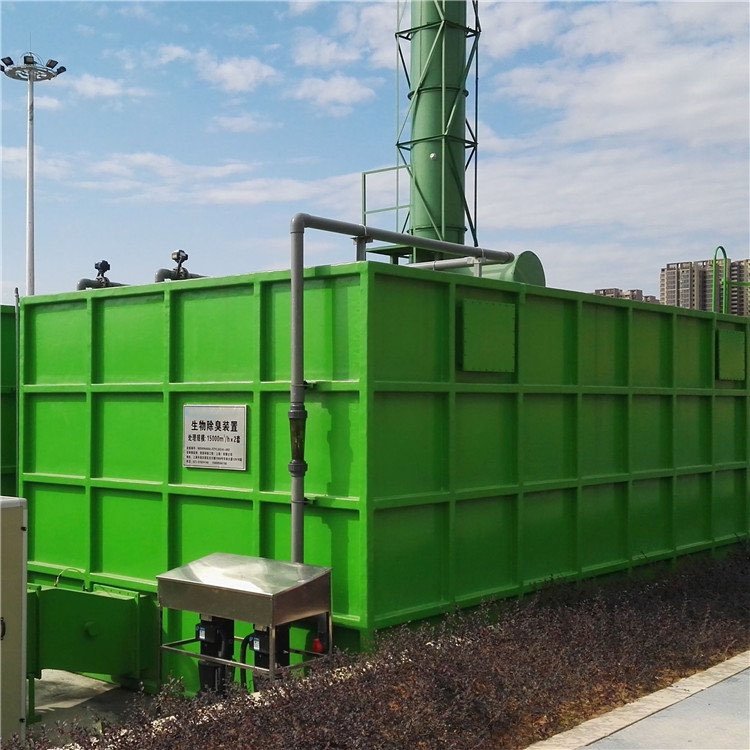
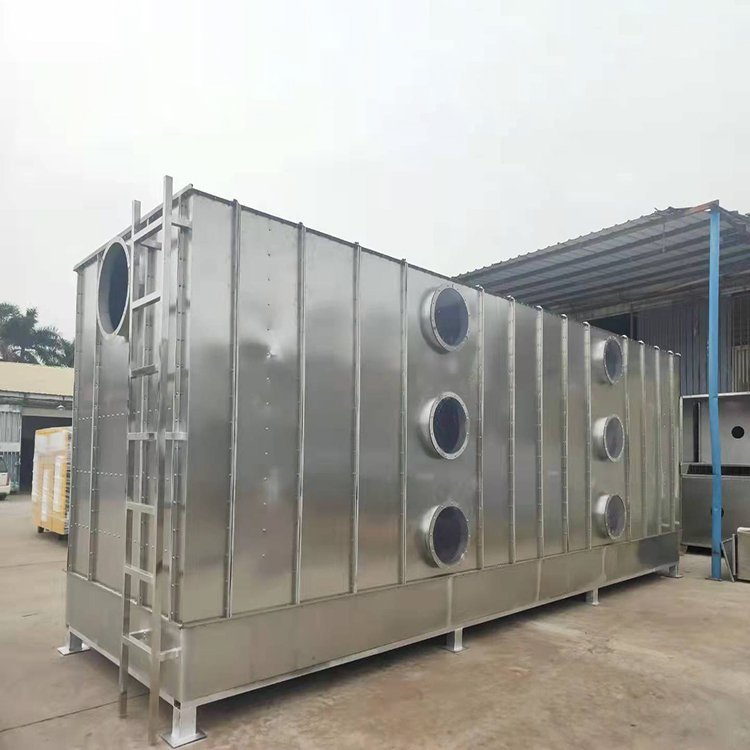
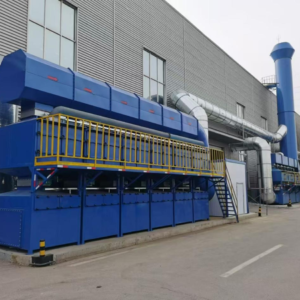
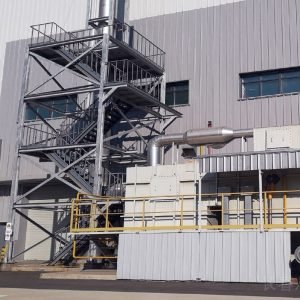
Biofilter waste gas purification equipment
Description
The biofilter deodorization equipment is an environmental protection device based on microbial metabolism, and its core consists of a pretreatment unit and a biofilter bed. The pretreatment unit removes large particle pollutants and adjusts the temperature and humidity of the gas through spraying, dust removal, humidification and other steps; the biofilter bed is filled with porous filter materials (such as biochar, volcanic rock, etc.), and microbial flora such as thiobacillus and nitrate bacteria are attached to the surface, and odor purification is achieved through the three steps of “adsorption-decomposition-conversion”. According to the type of filter material, the equipment can be divided into categories such as biological soil filter and biological trickling filter to meet the needs of different scenarios.
Working principle of biofilter deodorization equipment
The core of biofilter deodorization technology is to use the biodegradation of microorganisms to absorb and degrade odor substances, so as to achieve the purpose of deodorization. This process can be simply summarized as the following steps:
Odor collection: The generated odorous substances are collected and transported to the treatment system through an efficient and reasonable sealing system collection system. The sealing system usually consists of a structure sealing cover and a collection air duct to ensure that the odor enters the treatment process without leakage.
Humidification pretreatment: Before the odor enters the biofilter, it will first undergo humidification pretreatment. The purpose of this step is to increase the humidity of the odor, making it easier to be adsorbed by the biofilter material and increasing the activity of microorganisms.
Biodegradation: The humidified odor enters the biofilter and is fully in contact with the microorganisms on the surface of the filter material. Microorganisms use their powerful adsorption, absorption and degradation capabilities to decompose odorous substances into simple inorganic substances such as carbon dioxide, water, sulfates, and nitrates. These products are harmless to the environment and can be discharged directly.
Emission and monitoring: The treated gas is discharged through the emission system, which usually includes fans, emission chimney ducts, online monitoring systems and other parts. The online monitoring system can monitor the quality of the emission gas in real time to ensure that the emission standards are met.
3. Features of biofilter deodorization equipment
High-efficiency purification: The biofilter deodorization equipment has the ability to efficiently deodorize, and can remove organic matter in the odor at a rate of more than 90%, and even more than 99%.
Environmental protection and pollution-free: The equipment does not need to add chemical agents during operation, and relies entirely on the natural degradation process of microorganisms, so it will not cause secondary pollution to the environment.
Economic and energy-saving: The operating cost of the biofilter deodorization equipment is relatively low, requiring only a small amount of electricity and water resources, and does not require a lot of manual operation and maintenance. This helps to reduce the operating costs of enterprises and improve economic benefits.
Strong adaptability: The biofilter deodorization equipment can handle a variety of different concentrations and types of malodorous gases, and is suitable for various complex environments, such as urban sewage stations, garbage treatment plants, industrial plants, etc.
Stable operation: The microorganisms in the biofilter have adaptability and self-repairing capabilities, and can adapt to various environmental changes. This makes the biofilter deodorization technology show a high stability in the treatment effect, and can continuously and stably remove malodorous substances.
4. Application fields of biofilter deodorization equipment
The biofilter deodorization technology has been widely used in many fields and has achieved remarkable results. The following are some typical application examples:
Sewage treatment plant: In the odor-prone areas such as the screen room and sludge dewatering workshop of the sewage treatment plant, the biofilter deodorization equipment can effectively remove the malodorous gas in the sewage and improve the working environment and the surrounding air quality.
Garbage treatment station: In landfills, composting workshops, leachate treatment stations and other places, the biofilter deodorization equipment can treat a large amount of malodorous gas generated and reduce the impact on the environment.
Petrochemical enterprises: Petrochemical enterprises will produce malodorous gases such as sulfur-containing waste gas and volatile organic compounds (VOCs) during the production process. Biofilter deodorization equipment can effectively remove these harmful gases to ensure production safety and environmental protection.
Pharmaceutical and food factories: In the production process of pharmaceuticals and food, malodorous gases such as fermentation waste gas and feed processing odor pose a threat to product quality and employee health. The application of biofilter deodorization equipment can effectively solve these problems.
Reviews
There are no reviews yet.