

Belt filter press
Description
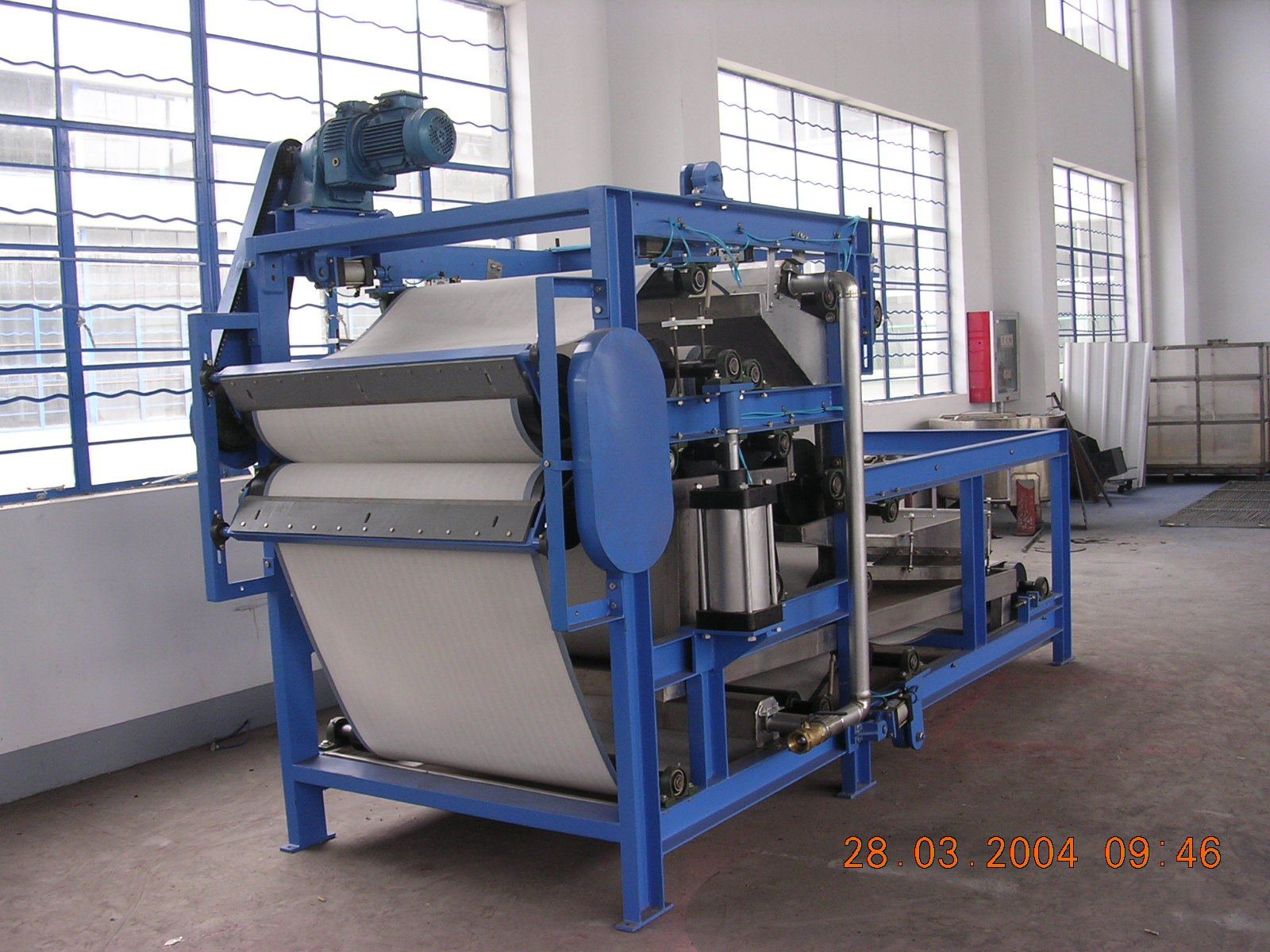
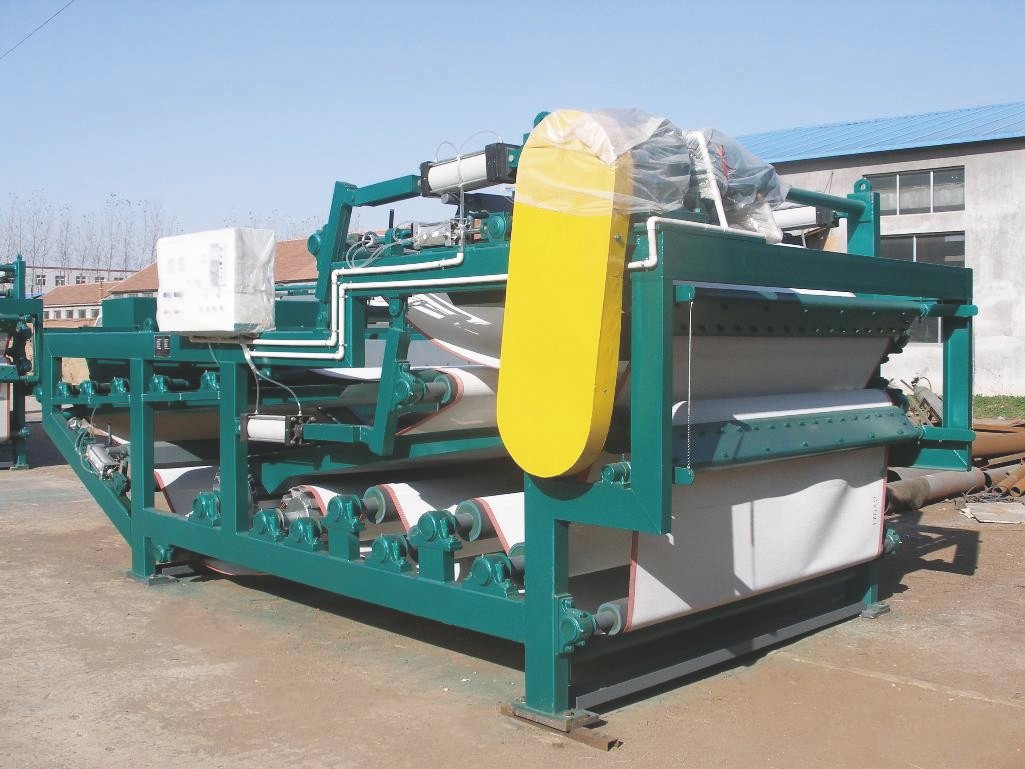
Belt filter press is a solid-liquid separation equipment, mainly used in sludge treatment and dehydration process. It can separate sludge into mud cake and clean water. The mud cake can be directly transported, landfilled or used for other industrial purposes, while the clean water can be recycled. The belt filter press has the characteristics of large processing capacity, high dehydration efficiency, high degree of automation and long service life. It is an ideal equipment for environmental governance and resource recycling.
The dehydration process of belt filter press can be divided into four important stages: pretreatment, gravity dehydration, wedge zone pre-pressure dehydration and pressing dehydration.
Working principle and workflow
After the concentrated sludge is fully mixed with a certain concentration of flocculant in a static and dynamic mixer, the tiny solid particles in the sludge are aggregated into larger floccules, and free water is separated at the same time. The flocculated sludge is transported to the filter belt for concentrated gravity dehydration. Under the action of gravity, the free water is separated to form stagnant sludge, which is then clamped between the upper and lower mesh belts. The sludge is gradually squeezed under the action of the extrusion and shear force from small to large in the wedge-shaped pre-pressing area, low pressure area and high pressure area to achieve the maximum degree of mud and water separation, and finally form a filter cake for discharge.
Application range
It is widely used in sludge dehydration treatment in urban domestic sewage, textile printing and dyeing, electroplating, papermaking, leather, brewing, food processing, coal washing, petrochemical, chemical, metallurgical, pharmaceutical, ceramic and other industries, and is also suitable for solid separation or liquid leaching processes in industrial production.
Reviews
There are no reviews yet.